Burkina Faso

Alpha 3
BFA

Related Content

Article

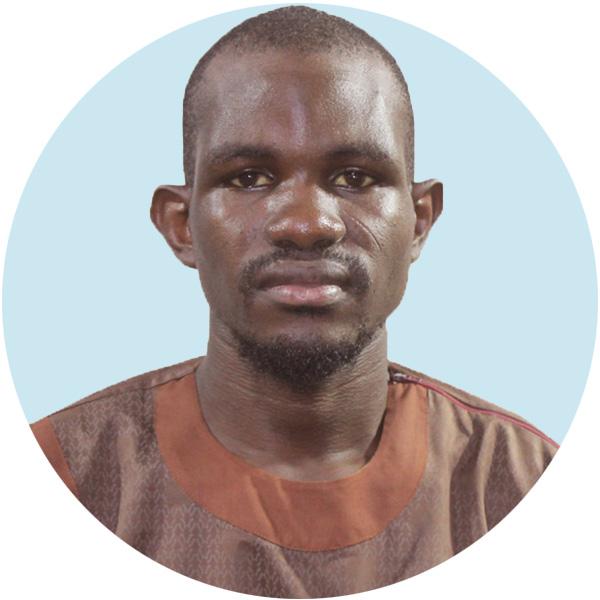
Interview with Dieudonne Ilboudo, Water and Environment Specialist, General Office of Agro-Pastoral Development and Irrigation of Ministry of Agriculture, Animal and Fisheries Resources of Burkina Faso
This interview provides an in-depth look at my expertise and experience in water resource management, environmental conservation, and the integration of AI and remote sensing technologies in Burkina Faso. My passion for water management stems from my desire to protect precious resources and my belief in the essential importance of providing water to communities, a principle reinforced when I joined the Ministry of Agriculture in 2021. As a Water and Environment Specialist at the General Office of Agro-Pastoral Development and Irrigation, I am responsible for irrigation systems, lowland rice-growing areas, and the protection of water infrastructure, while integrating innovation and remote sensing technologies to improve performance. My work also focuses on community conservation, including the removal of invasive aquatic plants from reservoirs and the treatment of gullies to combat soil erosion. I have experience in remote sensing and AI-based applications such as ML and DL for monitoring flood risks, erosion, and irrigation systems. I use machine learning algorithms such as CNN, Random Forest, U-Net, and SVM to analyze satellite images, predict the spread of invasive plants, and optimize water use. My research on integrating traditional knowledge into water management highlights the SoaSoagha concept, a collective work approach in Burkina Faso that promotes community conservation. Traditional rainwater harvesting, floodplain management, and small earthen dams (soussous) align with modern hydrological models, while sacred forests and customary water rights have been revealing, demonstrating indigenous methods of ecosystem protection. My project on AI-powered aquatic invasive plant management integrates machine learning (Satellite image analysis to classify areas with a high probability of aquatic plant presence), deep learning (Precise segmentation of invasive plants, such as water hyacinth and others, in these identified areas), and community engagement to extract, classify, and convert plants into compost, biogas, and biochar. My work highlights the importance of combining technological innovation and traditional knowledge to strengthen climate resilience, ensure water security, and promote sustainable development in Burkina Faso and beyond.
Interview with Dieudonne Ilboudo, Water and Environment Specialist, General Office of Agro-Pastoral Development and Irrigation of Ministry of Agriculture, Animal and Fisheries Resources of Burkina Faso

This interview provides an in-depth look at my expertise and experience in water resource management, environmental conservation, and the integration of AI and remote sensing technologies in Burkina Faso. My passion for water management stems from my desire to protect precious resources and my belief in the essential importance of providing water to communities, a principle reinforced when I joined the Ministry of Agriculture in 2021. As a Water and Environment Specialist at the General Office of Agro-Pastoral Development and Irrigation, I am responsible for irrigation systems, lowland rice-growing areas, and the protection of water infrastructure, while integrating innovation and remote sensing technologies to improve performance. My work also focuses on community conservation, including the removal of invasive aquatic plants from reservoirs and the treatment of gullies to combat soil erosion. I have experience in remote sensing and AI-based applications such as ML and DL for monitoring flood risks, erosion, and irrigation systems. I use machine learning algorithms such as CNN, Random Forest, U-Net, and SVM to analyze satellite images, predict the spread of invasive plants, and optimize water use. My research on integrating traditional knowledge into water management highlights the SoaSoagha concept, a collective work approach in Burkina Faso that promotes community conservation. Traditional rainwater harvesting, floodplain management, and small earthen dams (soussous) align with modern hydrological models, while sacred forests and customary water rights have been revealing, demonstrating indigenous methods of ecosystem protection. My project on AI-powered aquatic invasive plant management integrates machine learning (Satellite image analysis to classify areas with a high probability of aquatic plant presence), deep learning (Precise segmentation of invasive plants, such as water hyacinth and others, in these identified areas), and community engagement to extract, classify, and convert plants into compost, biogas, and biochar. My work highlights the importance of combining technological innovation and traditional knowledge to strengthen climate resilience, ensure water security, and promote sustainable development in Burkina Faso and beyond.

Map

Disclaimer: The designations employed and the presentation of material on this map do not imply the expression of any opinion whatsoever on the part of the Secretariat of the United Nations concerning the legal status of any country, territory, city or area or of its authorities, or concerning the delimitation of its frontiers or boundaries. They solely serve navigation purposes on this page. Please also note that the map does not filter items if the search term filter is used.

Click on any of the highlighted countries to retrieve further information.

Project / Mission / Initiative / Community Portal

Space-Enabled Modeling of the Niger River to Enhance Regional Water Resources Management

River and floodplain landscapes are constantly undergoing change due to natural and manmade processes putting pressure on fluvial systems, such as reservoirs, intensive agriculture, high-impact repetitive droughts and floods and the overall effects of climate change. All these bring about considerable changes, some of which irreversibly degrade ecosystem services, local economies and impact lives, particularly in sensitive transitional zones such as the Sahel region in Africa and its Niger River Basin (NRB).

Stakeholder

Global Water & Sanitation Center

The Global Water & Sanitation Center (GWSC) was formally established in 2022, a legacy of Gates Foundation (GF) and the Asian Institute of Technology’s (AIT) partnership to host and mainstream citywide inclusive sanitation (CWIS) and advance the WASH agenda in South and Southeast Asia. Its mission is to ensure universal access to safe, inclusive, and sustainable WASH services for all in Asia and beyond. In its efforts, the center contributes to achieving several key Sustainable Development Goals (SDGs).

Global Water Partnership

The Global Water Partnership (GWP) is a global action network with over 3,000 Partner organisations in 179 countries. The network has 69 accredited Country Water Partnerships and 13 Regional Water Partnerships.

The network is open to all organisations involved in water resources management: developed and developing country government institutions, agencies of the United Nations, bi- and multi-lateral development banks, professional associations, research institutions, non-governmental organisations, and the private sector.

Person